Trend Indicators
Trend indicators help identify the dominant market direction and filter out noise from minor fluctuations.
Simple Moving Average
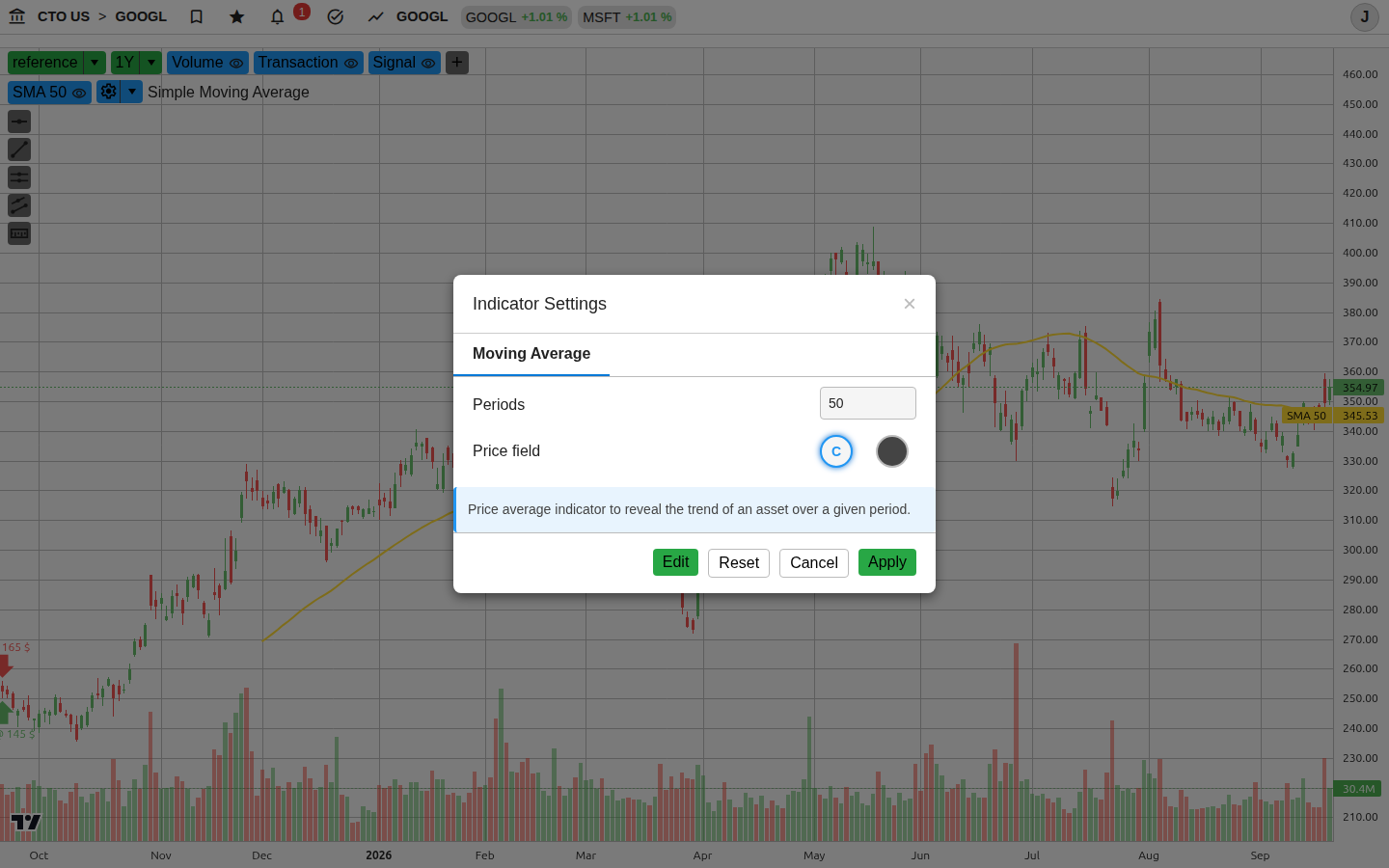
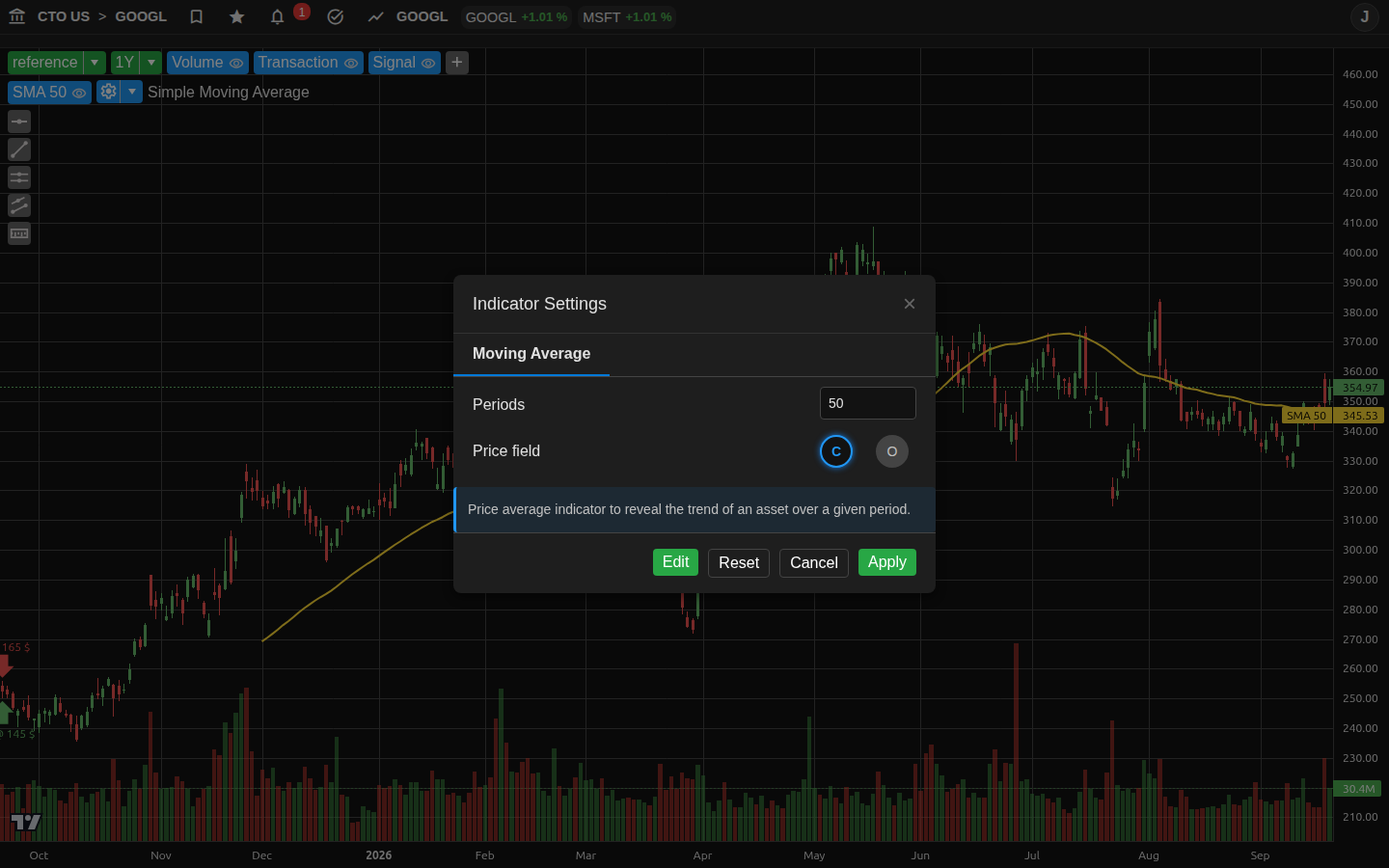
Smoothes price data to create a fluid line making it easier to identify the direction of the trend.
The crossover of price or two averages (short/long) generates buy or sell signals. The exponential average (EMA) reacts faster than the simple one (SMA).
- Periods : 50
- Price field : close
Exponential Moving Average
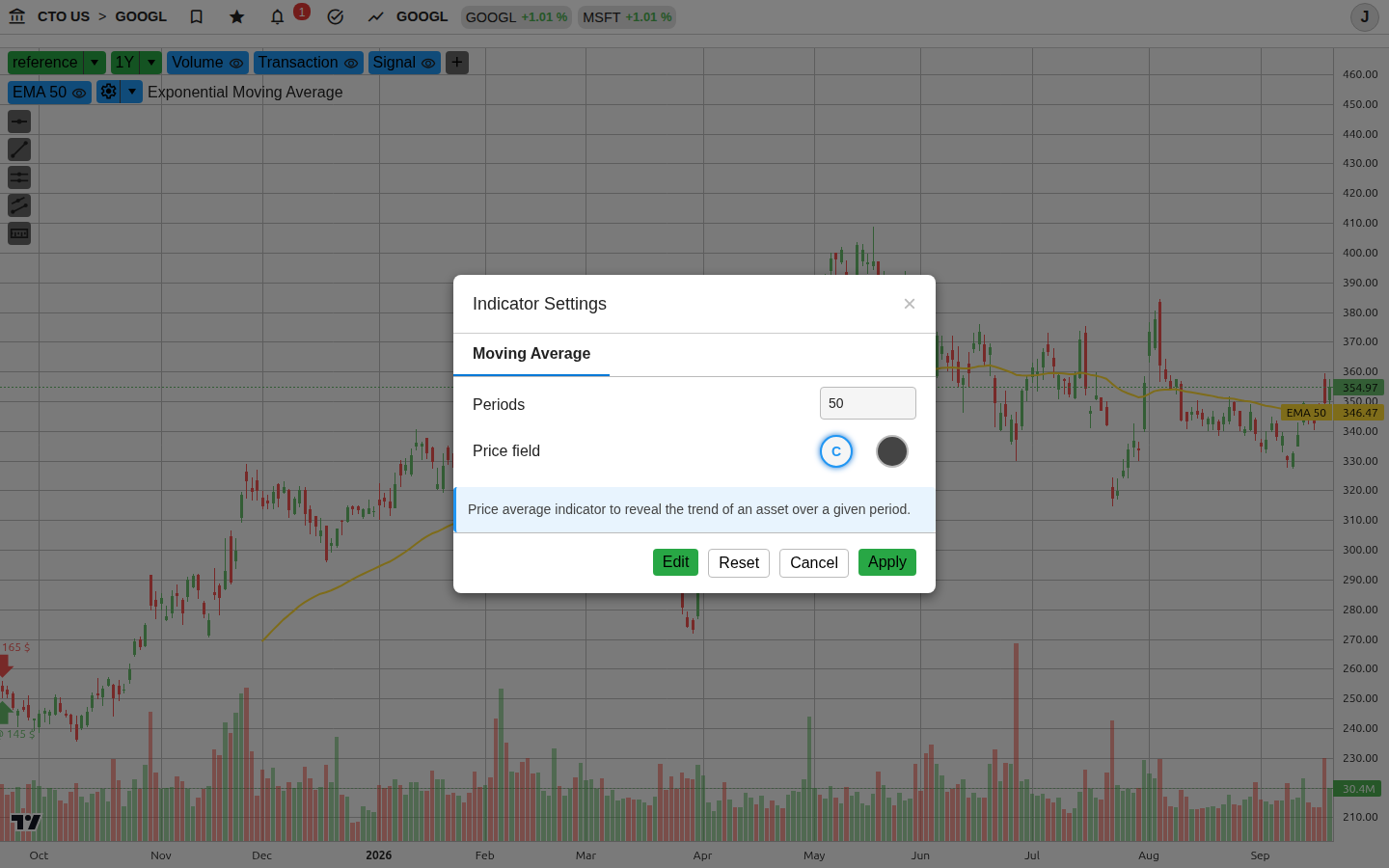
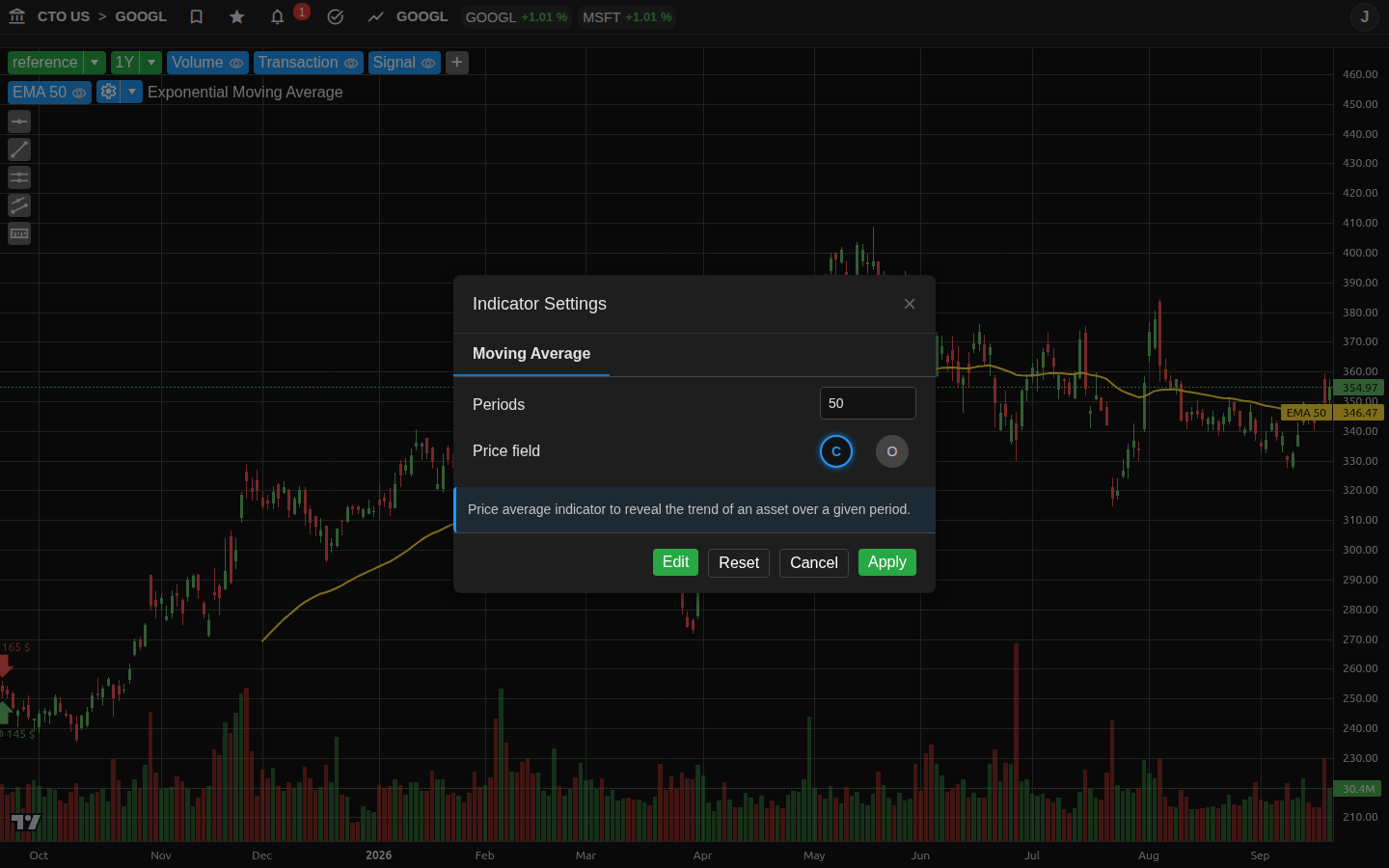
Smoothes price data to create a fluid line making it easier to identify the direction of the trend.
The crossover of price or two averages (short/long) generates buy or sell signals. The exponential average (EMA) reacts faster than the simple one (SMA).
- Periods : 50
- Price field : close
Linear Regression
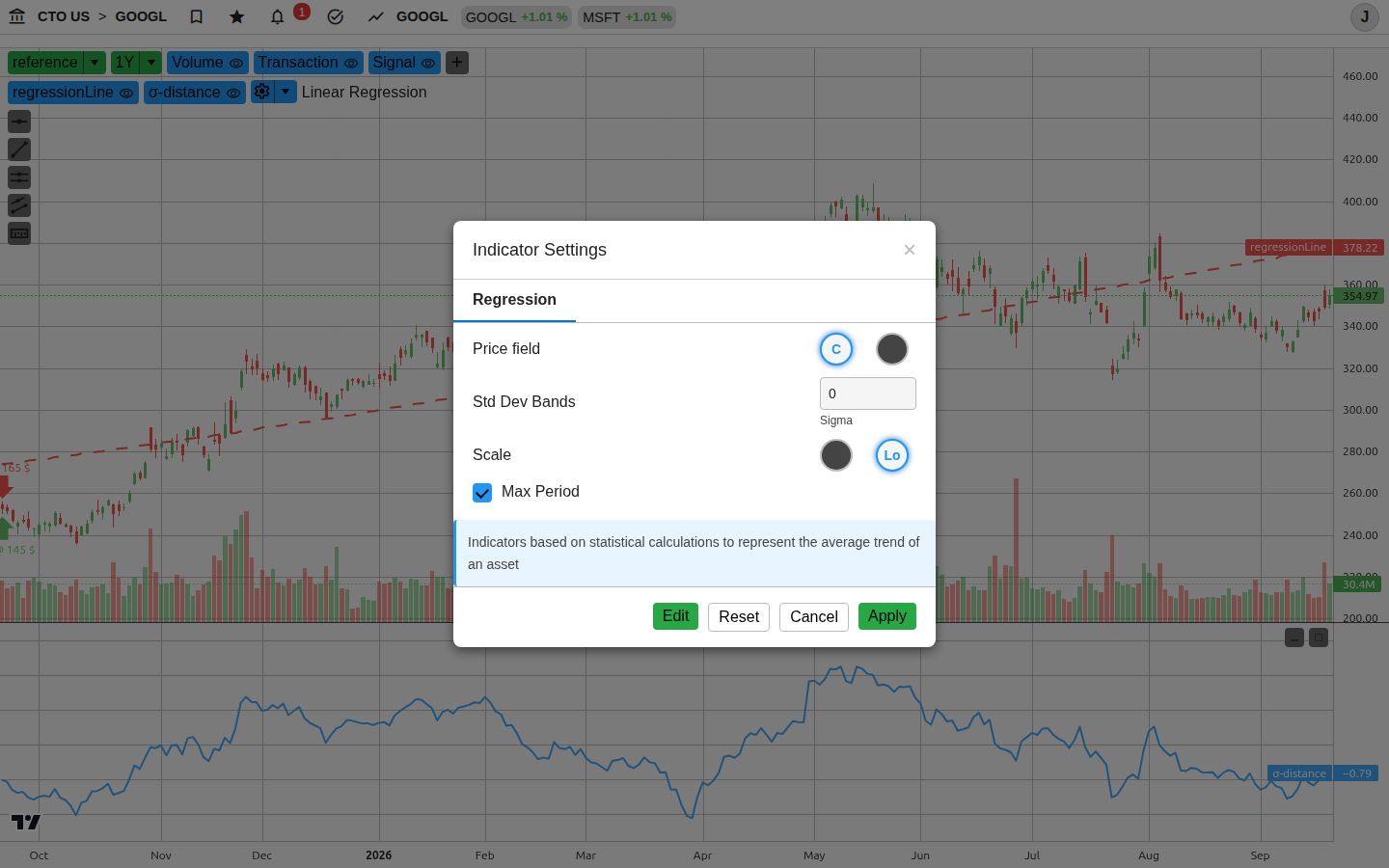
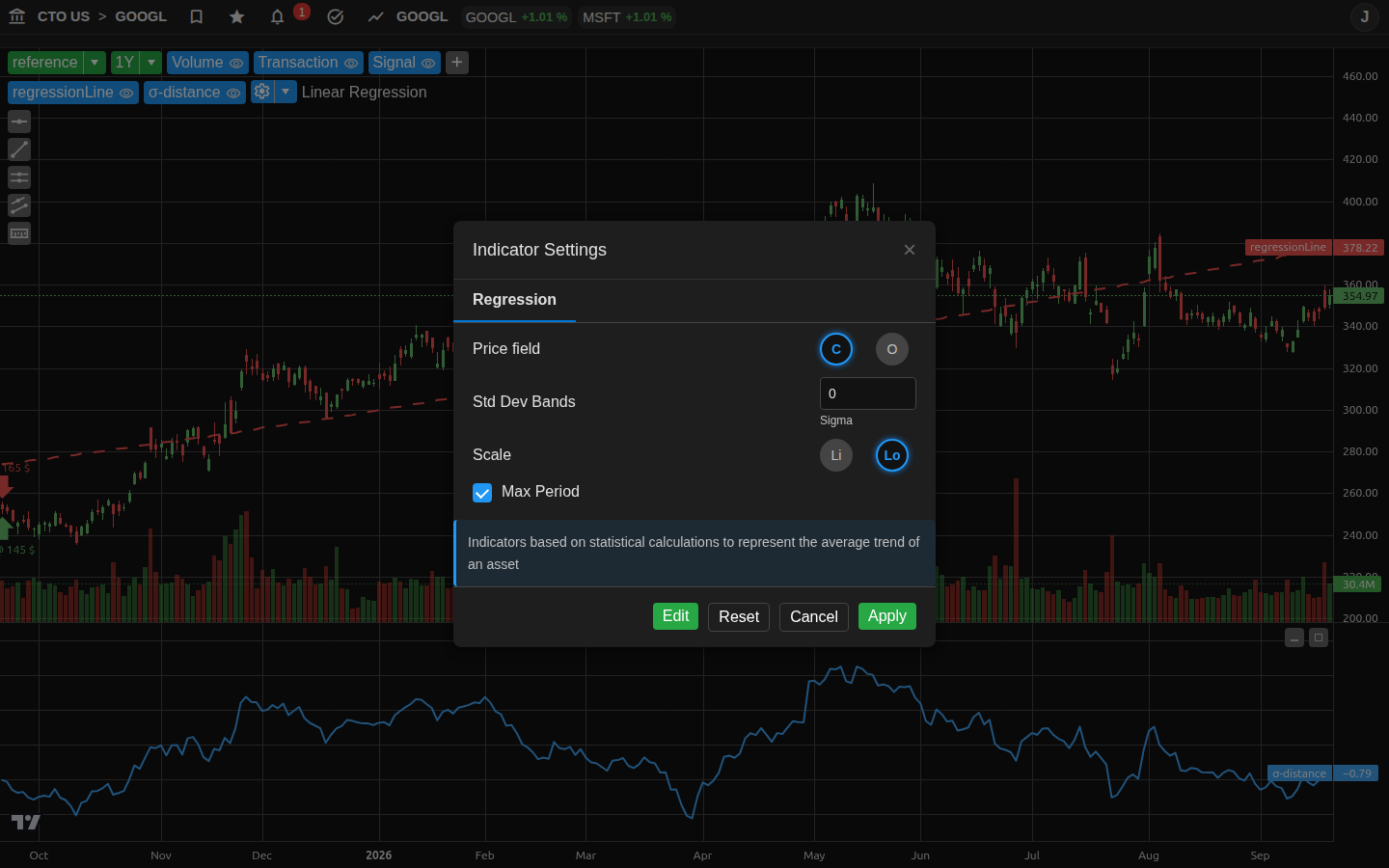
Statistical tool that plots a straight line minimizing the distance between prices over a given period to show the pure trend.
The slope of the line indicates the strength of the trend, and deviations from the line can signal mean reversion opportunities.
- Price field : close
- Std Dev Bands : 0
- Scale : log
- Max Period : false
Ichimoku Cloud
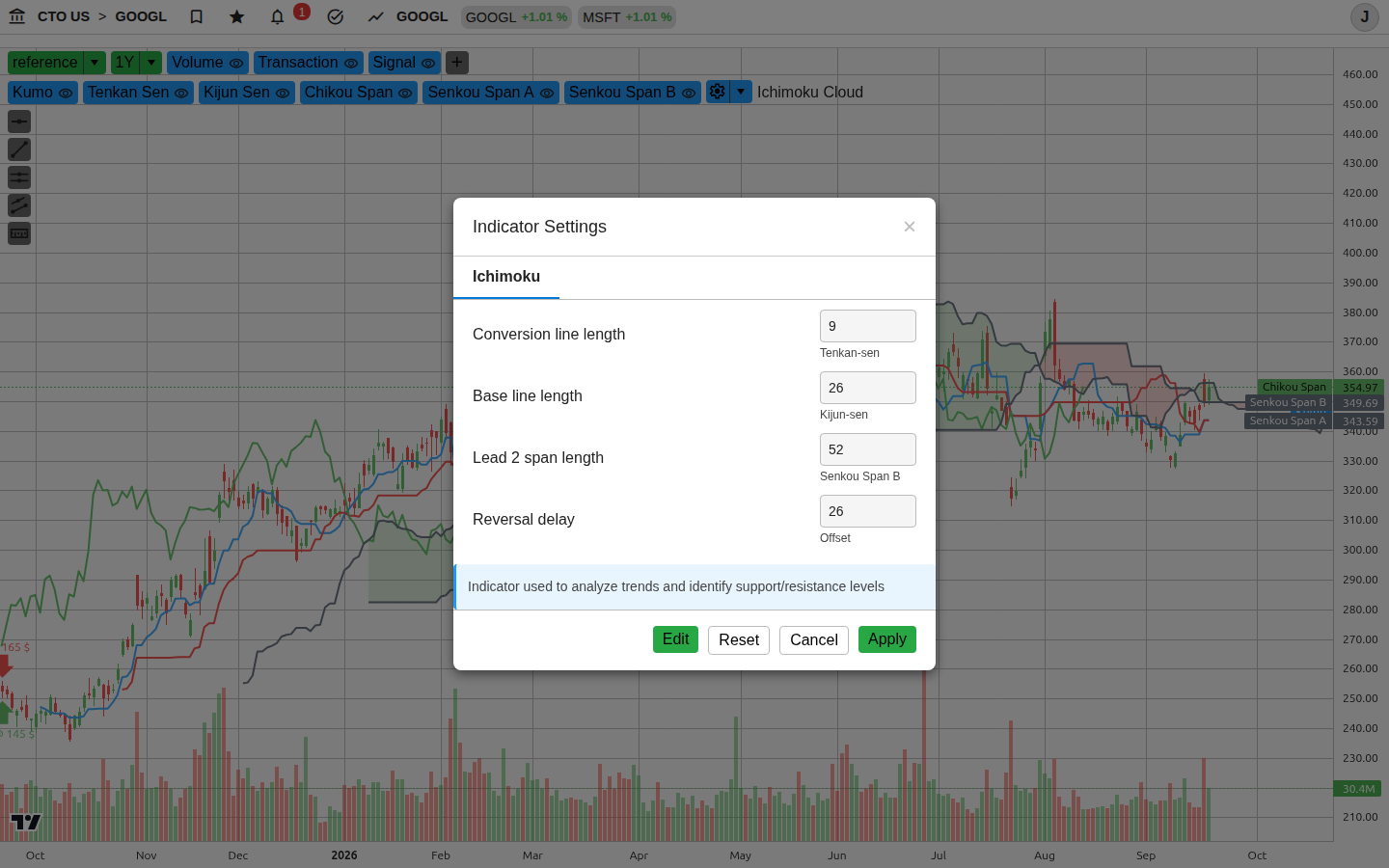
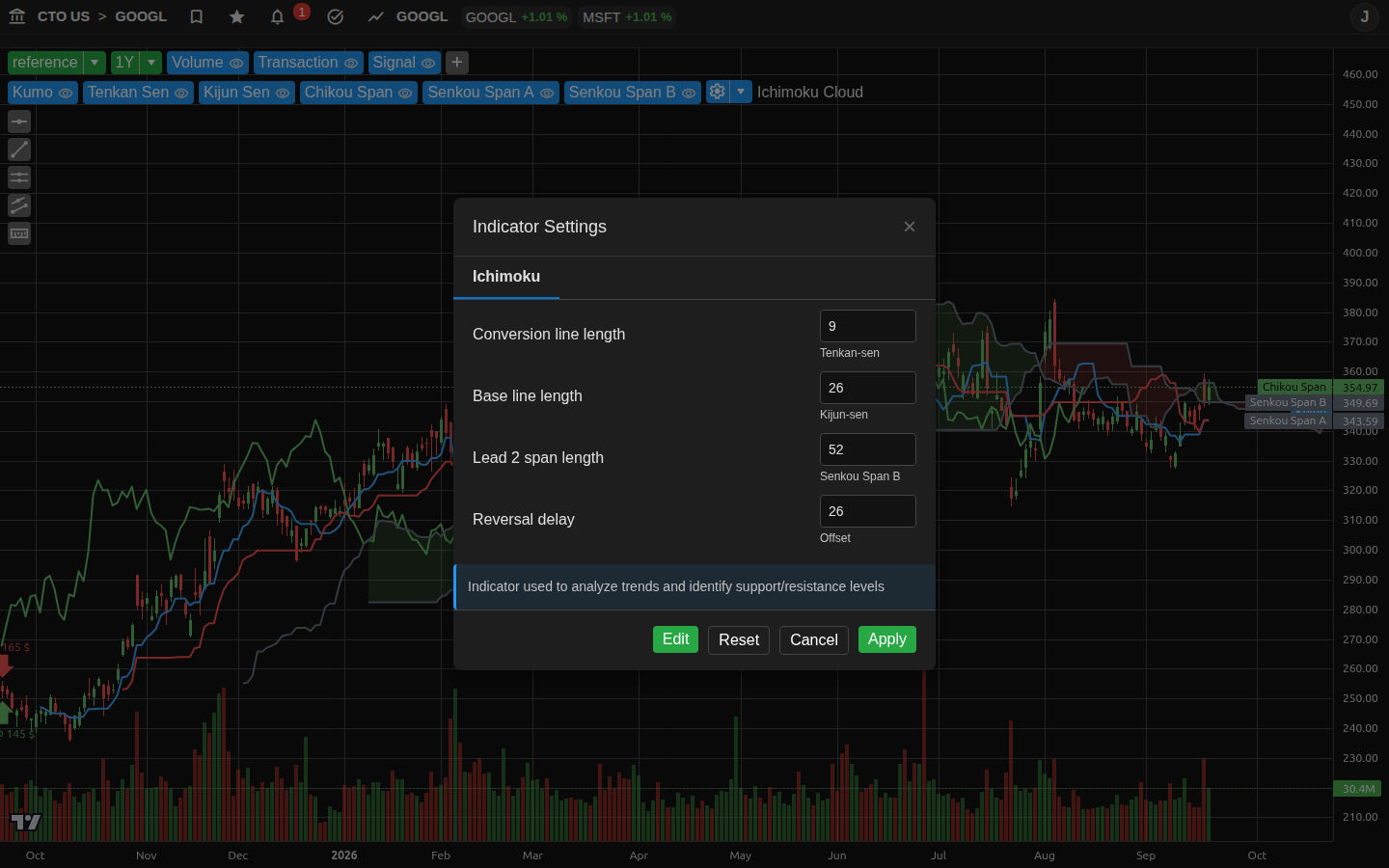
Complete system that defines support and resistance, identifies trend direction and measures momentum.
Price above the cloud indicates a bullish trend. The cloud itself serves as a support/resistance zone.
- Conversion line length : 9
- Base line length : 26
- Lead 2 span length : 52
- Reversal delay : 26
Parabolic SAR
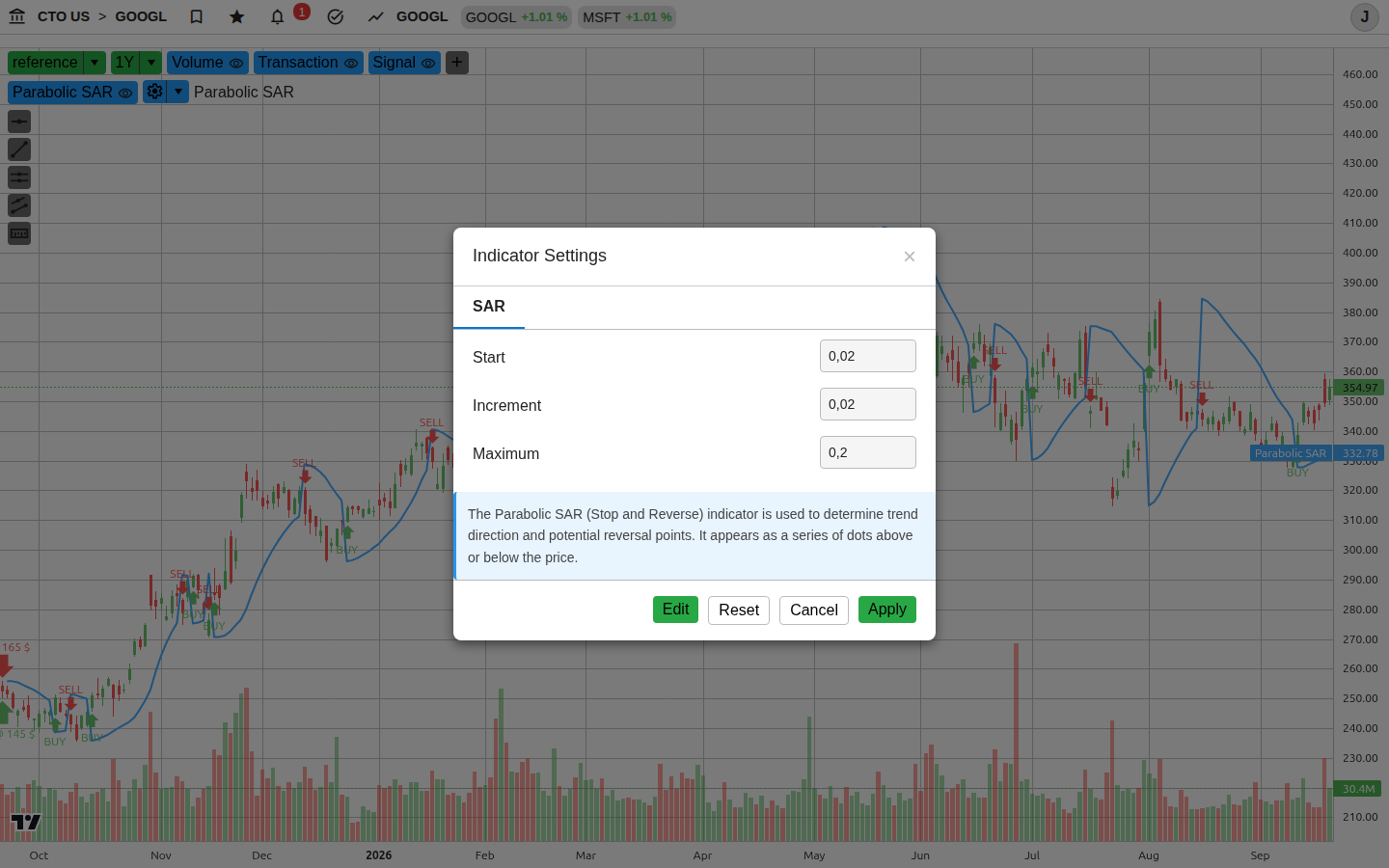
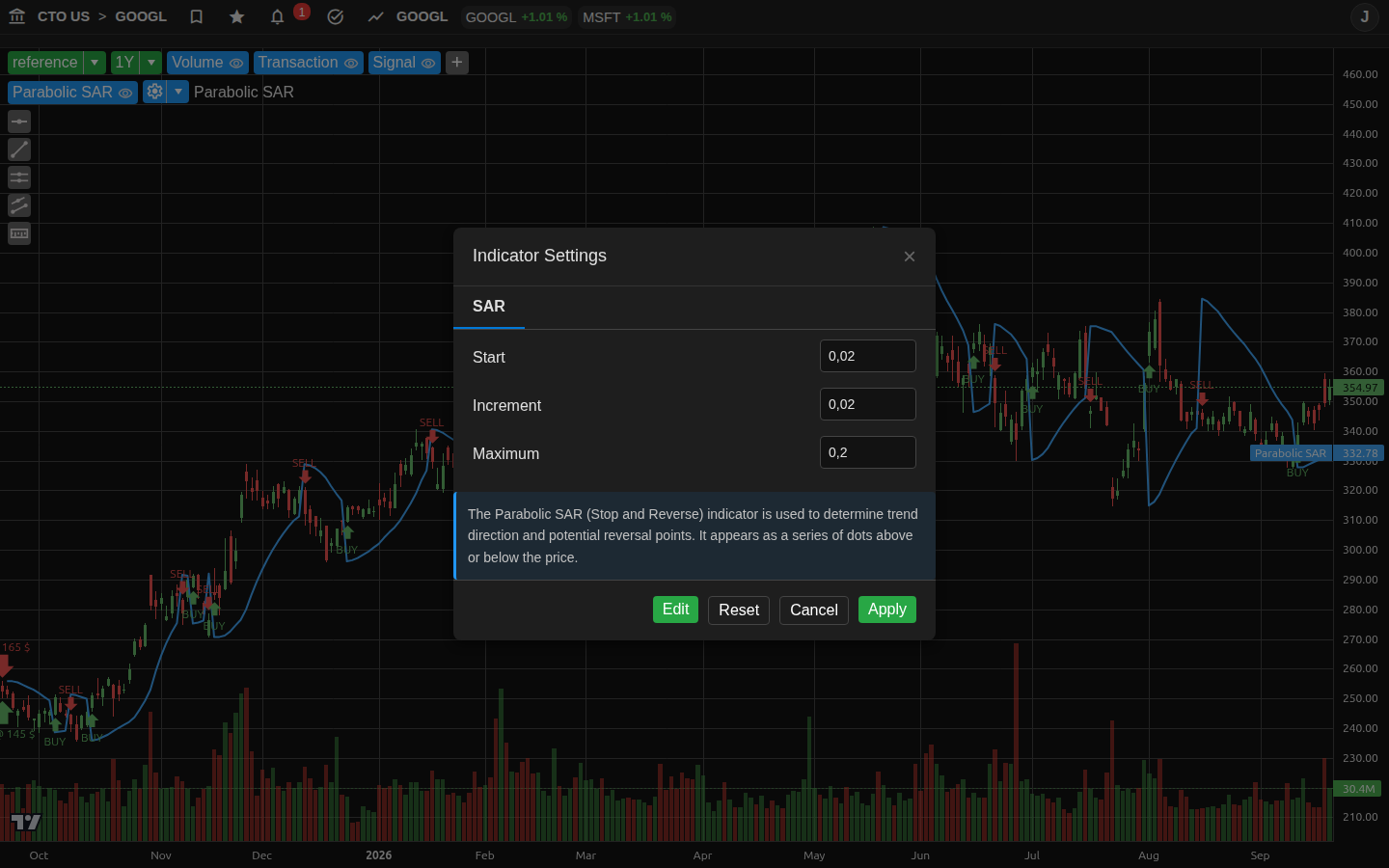
Trend-following indicator that provides precise entry and exit points.
Dots below price indicate a bullish trend, above indicate a bearish trend.
- Start : 0.02
- Increment : 0.02
- Maximum : 0.2
SuperTrend
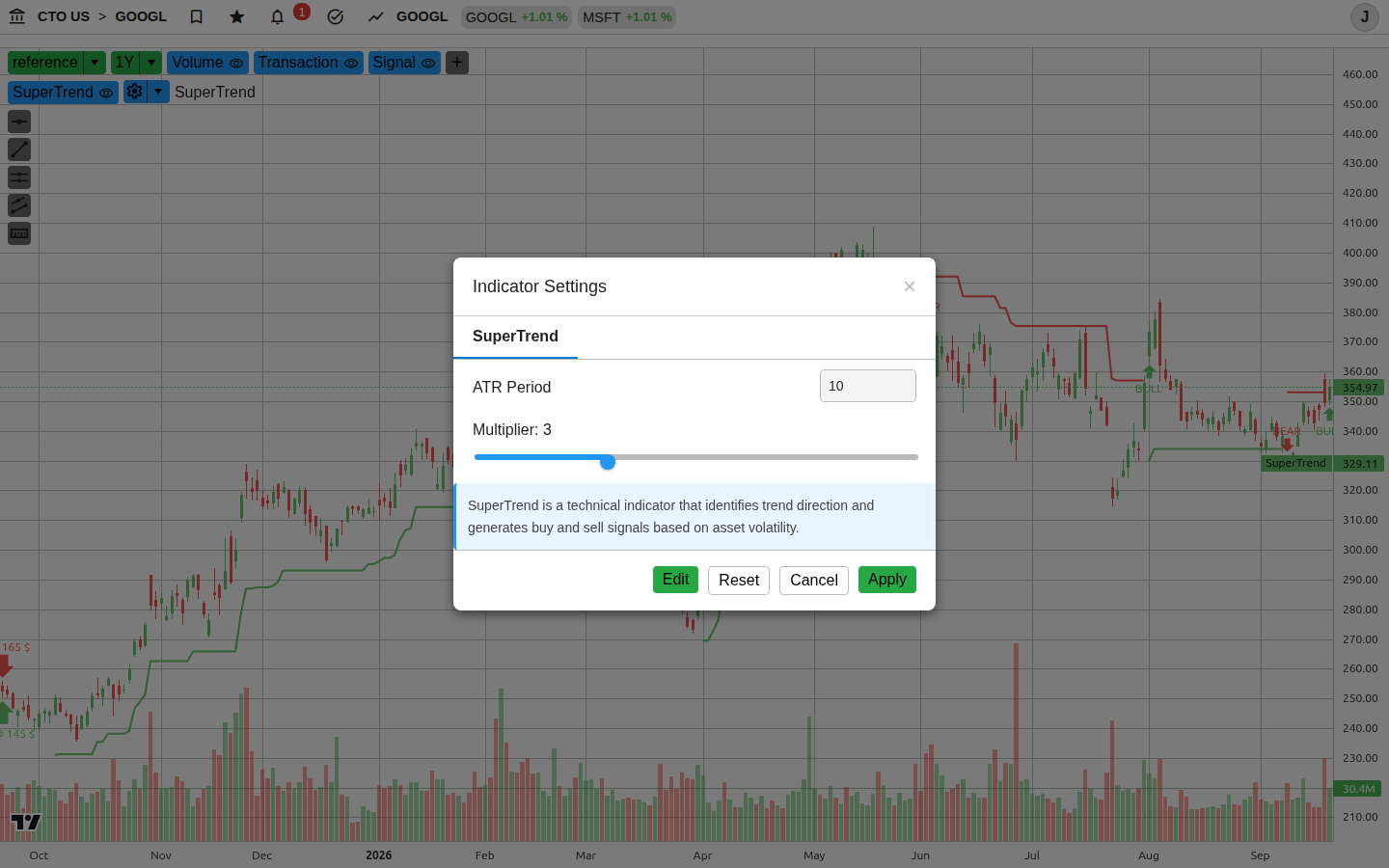
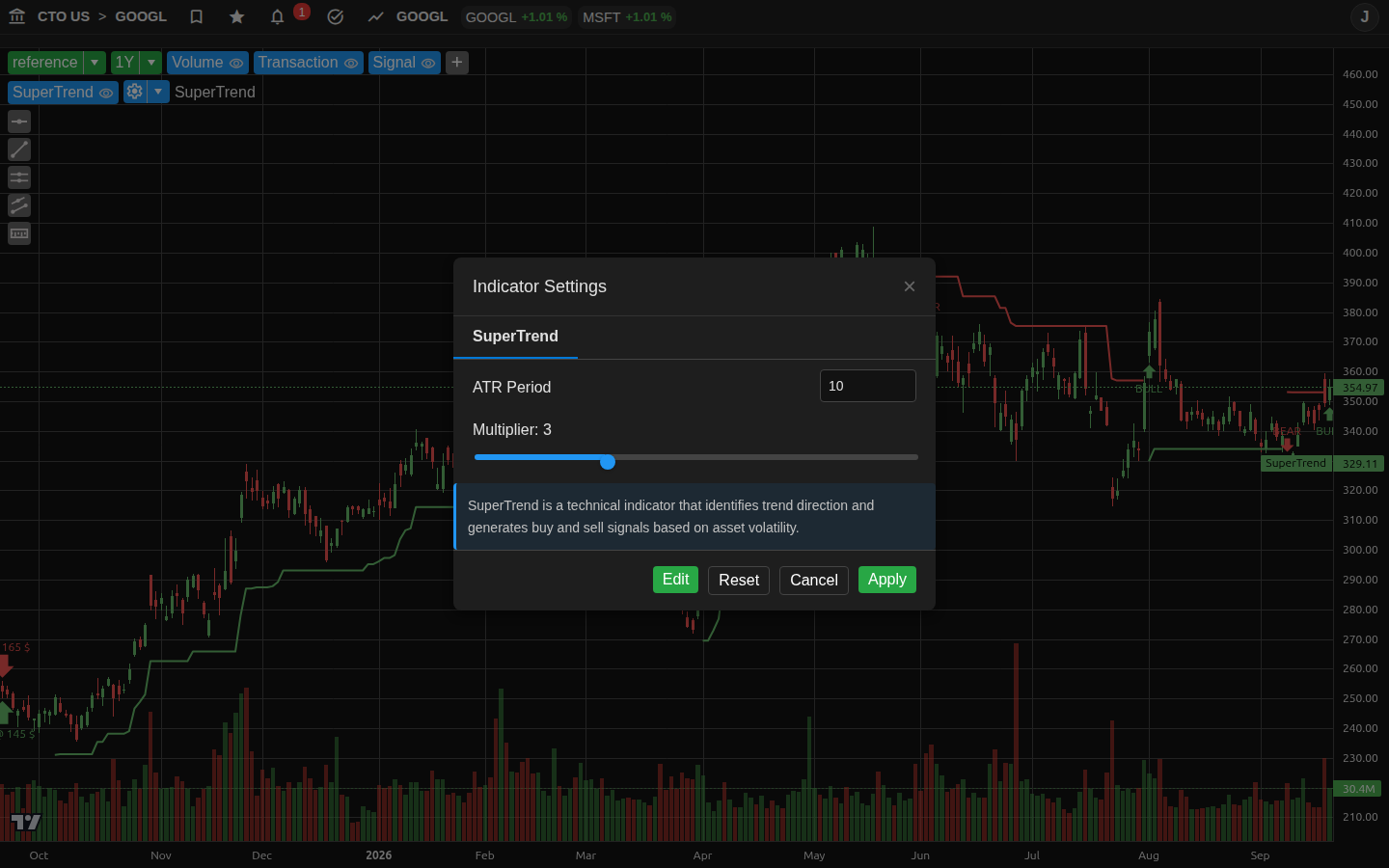
ATR-based indicator to follow the current trend with a volatility filter.
Very effective for maintaining a position as long as the trend is not broken.
- ATR Period : 10
- Multiplier : 3
ADX (Directional Movement)
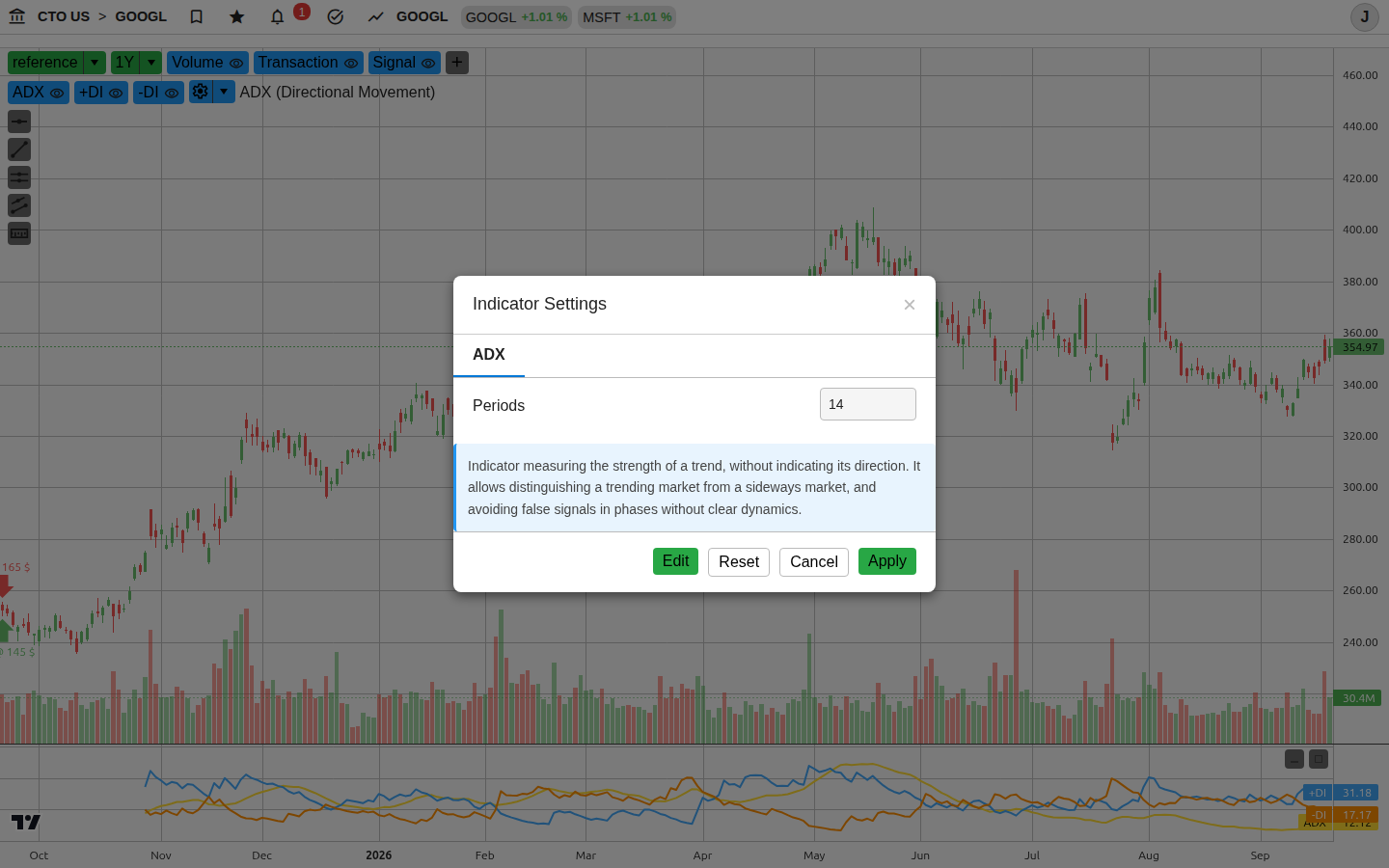
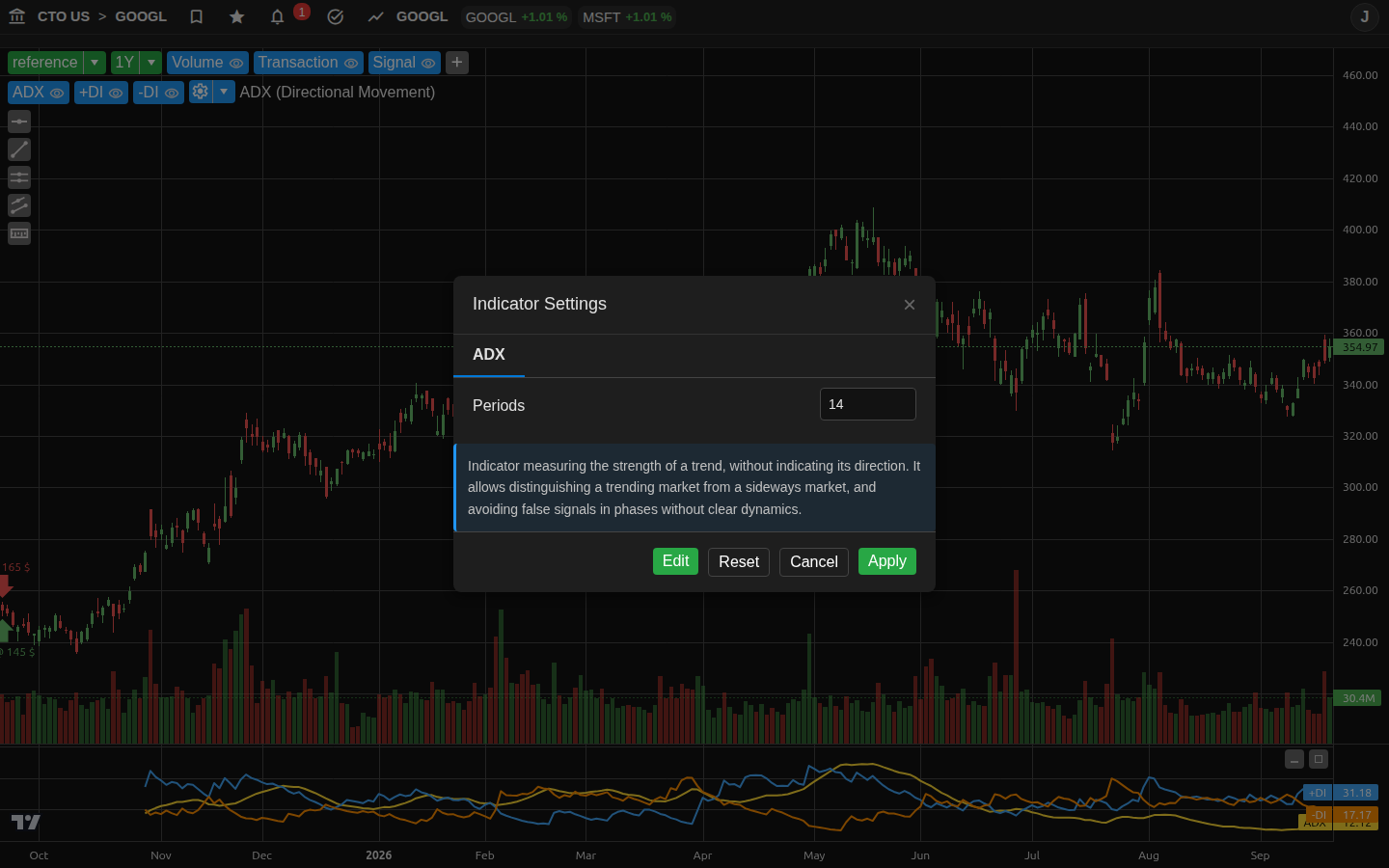
Measures the strength of a trend, whether bullish or bearish.
A value above 25 indicates a strong trend, below 20 a trendless market.
- Periods : 14